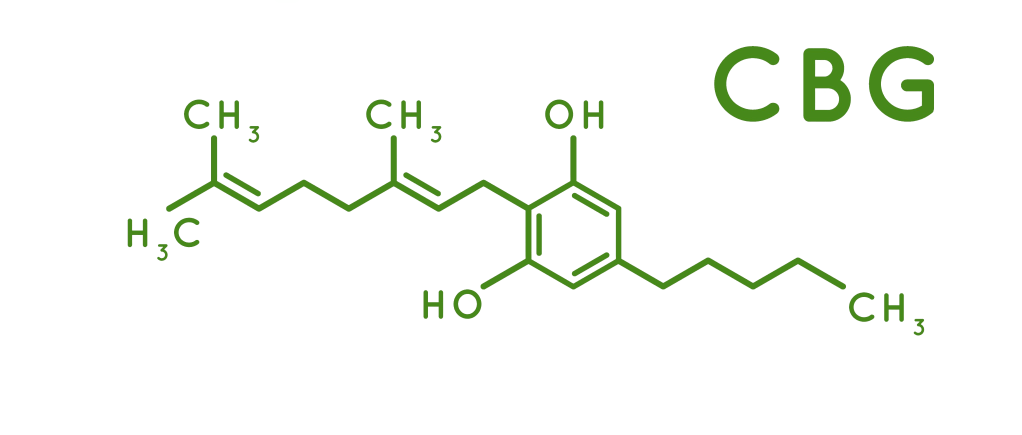
Cannabigerol (CBG) is a non-psychoactive compound found in the Cannabis sativa plant. Often called the “mother cannabinoid,” CBG serves as the chemical precursor to CBD, THC, and other cannabinoids. While typically present in very small amounts in mature plants, advancements in hemp cultivation and extraction have made concentrated CBG products more widely available — and researchers are taking notice.
How CBG Works in the Body
The human body has an endocannabinoid system (ECS) — a network of receptors (CB₁ and CB₂), enzymes, and signaling molecules that help regulate mood, inflammation, pain, and more.
CBG interacts with:
- CB₁ & CB₂ receptors (affecting mood, inflammation, and pain)
- α₂-adrenergic receptors (involved in blood pressure regulation)
- TRP channels (linked to pain and temperature perception)
- PPARγ nuclear receptors (involved in metabolism and inflammation control)
Because it works through multiple pathways, CBG’s effects are broad and distinct from CBD or THC.
Evidence-Based Benefits of CBG
1. Anti-Inflammatory & Antioxidant Properties
In laboratory and animal studies, CBG reduced inflammatory markers such as TNF-α and IL-1β, inhibited enzymes like COX-2 and iNOS, and protected tissues from oxidative stress. These effects may be relevant for gut health, skin conditions, and inflammatory pain (Capasso et al., 2022; He et al., 2025).
2. Neuroprotection
CBG has shown promise in protecting neurons from damage in models of Huntington’s disease, Parkinson’s disease, and multiple sclerosis (Hughes et al., 2020).
3. Anxiety & Mood Regulation
A 2024 randomized controlled trial found that a single 20 mg dose of hemp-derived CBG reduced anxiety and stress while improving short-term memory — without impairing cognitive function (Scopetti et al., 2024).
4. Potential Cardiovascular Benefits
Preclinical research suggests CBG may lower blood pressure via α₂-adrenergic receptor activation, pointing to potential heart health applications (Bennett et al., 2022).
CBG vs. CBD
While both CBG and CBD are non-psychoactive and derived from hemp, their molecular targets differ.
- CBD primarily influences serotonin and vanilloid receptors, offering strong anti-anxiety and anti-inflammatory effects.
- CBG interacts with a broader range of receptors, potentially providing stronger neuroprotective and focus-enhancing properties.
Many consumers choose products that combine both for the entourage effect, where cannabinoids work synergistically.
How to Use CBG
CBG is available in:
- Tinctures & oils (often blended with CBD or CBN)
- Capsules
- Topicals
- Hemp flower or vape extracts
For best results:
- Choose hemp-derived products with <0.3% THC (federally legal in the U.S.)
- Look for third-party lab testing to verify purity and potency
- Start with a low dose and adjust gradually
Conclusion
CBG shows compelling preclinical support for anti-inflammatory, neuroprotective, anxiolytic, cardiovascular, antimicrobial, anticancer, and liver health benefits. A single human study confirms anxiety reduction and cognitive safety at acute doses. However, comprehensive clinical data are still needed before any definitive health claims can be made.
References
Scopetti, F., et al. “Acute Effects of Cannabigerol on Anxiety, Stress, and Mood.” Scientific Reports, July 2024. PMID: 39003387
Bennett, M. L., et al. “Acute Cannabigerol Administration Lowers Blood Pressure in Mice.” Frontiers in Physiology, 2022. PMCID: PMC9124753
Capasso, R., et al. “Pharmacological Aspects and Biological Effects of Cannabigerol and Its Synthetic Derivatives.” Evidence-Based Complementary and Alternative Medicine, 2022. PMCID: PMC9666035
He, D., et al. “Therapeutic Potential of Cannabigerol.” International Journal of Molecular Sciences, Apr. 2025. PMID: 40206058
Hughes, B., et al. “Protective Effects of Cannabidivarin and Cannabigerol on Cells of the Blood–Brain Barrier.” Journal of Neuroinflammation, 2020. PMID: 32316962


Leave a Reply